
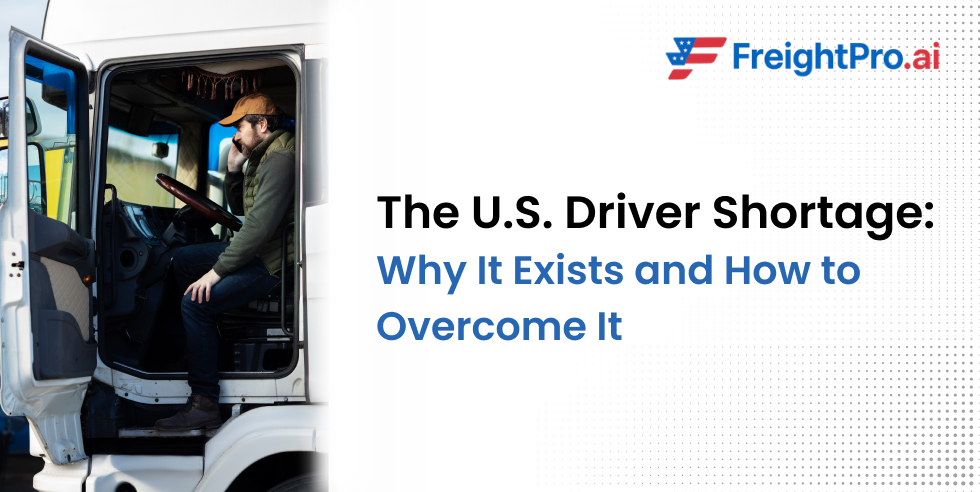
The U.S. driver shortage is not merely a lack of available personnel but a complex mix of supply and demand within the vital trucking industry. It directly impacts everything from consumer prices to the availability of goods on store shelves, making it a critical economic concern. The American Trucking Associations (ATA) consistently highlights this issue, projecting significant gaps in the workforce.
What is the Current State of the Shortage?
The estimated driver shortage for 2025 is projected to be between 60,000 and 80,000 commercial drivers, reflecting ongoing supply constraints amid steady freight volumes. In 2024, trucks moved 11.27 billion tons. They carried 67% of U.S.–Canada road/rail trade. This shows trucking is critical, even when there are not enough drivers.
Note: Compare the demand of available drivers in your region on FreightPro.
Why is the Shortage a Persistent Problem?
The shortage persists due to an aging workforce, regulatory hurdles, and the lifestyle realities of long-haul work. The U.S. Bureau of Labor Statistics (BLS) projects truck driver employment to grow 5% from 2023 to 2033, so demand will stay firm even as recruiting and retention remain difficult.
U.S. Truck Driver Shortage Key Metrics of 2025 (Projections)
| Metric | Value | What it means |
| Driver shortage (2025) | 60,000 to 80,000 | Not enough drivers for demand |
| Freight moved (2024) | 11.27B tons | Trucks move most goods |
| U.S.–Canada trade share | 67% | Most cross-border surface freight by truck |
| Trucking share (by weight) | 72% | Trucks move most U.S. freight |
| Job growth (2023–2033) | 5% | Demand for drivers will rise |
Key Factors Contributing to the Shortage
Demographic Challenges and an Aging Workforce
Many experienced drivers are retiring, and too few young workers are entering. Only 12% of drivers are under 25, and just 6% are women. This lack of diversity and new entrants continually drains capacity.
Regulatory Hurdles and Lifestyle Disincentives
The Drug & Alcohol Clearinghouse has sidelined more than 180,000 drivers since 2020, reducing the available pool. Long periods away from home, irregular hours, limited parking, and poor roadside amenities make retention harder.
Economic Pressures and Compensation Issues
Pay is rising. NTI forecasts a 2.7% base-pay increase for for-hire carriers in 2025 but the job’s demands and rising living costs still deter recruits. Training costs are high, income can be unpredictable for owner-operators, and visa limits for foreign drivers (nearly 1 in 6) can tighten supply.
What are the Primary Deterrents for New Drivers?
- High entry costs for CDL training and fees
- Under-21 interstate restriction shrinking the pipeline
- Perception of the job as low-status, physically demanding, and isolating
- Lack of amenities including insufficient parking, poor facilities, limited healthy food options
Economic and Supply Chain Impacts
Rising Costs and Inflationary Pressures
Scarcity of drivers forces carriers to raise wages and incentives, pushing up freight rates and, ultimately, consumer prices, amplifying inflationary pressure in many sectors.
Supply Chain Vulnerabilities and Delays
Driver shortages disrupt schedules, cause stockouts, and strain just-in-time systems. Manufacturing, retail, agriculture, and construction all face timing risks and higher buffer inventories.
Impact on Specific Industries
Retailers rely on punctual replenishment, agriculture needs speed for perishables; and construction depends on just-in-time materials. Delays ripple through production, sales, and project timelines, affecting GDP and competitiveness.
How Does the Driver Shortage Affect Consumers?
- Higher prices
- Limited availability
- Reduced choice
- Slower delivery times
Strategies for Driver Recruitment
Targeting Underrepresented Groups
Women in Trucking programs (mentorships, facilities, safety), youth apprenticeships (18–20 under supervision), and veteran recruitment can widen the pipeline with motivated, skilled candidates.
Recruiter Note: Post roles with clear facilities/safety details and home-time expectations on FreightPro.
Improving Training and Entry Pathways
Company-sponsored CDL training, grants and scholarships, and modernized, tech-forward curricula lower barriers and better prepare candidates for real-world conditions.
Marketing and Public Perception Campaigns
Reframe trucking as a respected, essential career. Highlight economic impact, clear advancement paths (owner-operator, dispatcher, fleet manager), and employers offering predictable home time.
Some Effective Recruitment Tools are:
- Online job boards
- Social media campaigns
- Career fairs (especially veterans/vocational)
- Referral programs with driver incentives
Enhancing Driver Retention and Working Conditions
Competitive Compensation and Benefits
Offer competitive base pay, performance bonuses (safety, on-time, fuel efficiency), comprehensive health and retirement plans, and meaningful paid time off.
Improving Work-Life Balance and Home Time
Dedicated routes, flexible scheduling, and modern, comfortable equipment (better sleepers, connectivity) reduce burnout and churn.
Hiring Tip: Label home-time clearly in postings like (weekly, weekends, etc.) on FreightPro so you attract the right candidates.
Driver Support and Respect
Mentorship programs, accessible management, regular feedback, recognition for safety and service, health and wellness resources, and advocacy for better parking and amenities build loyalty.
Some of best practices for driver retention are
- Regular communication and feedback loops
- Recognition programs for milestones
- Professional development and endorsements
- Health and wellness programs
Technological Innovations and Future Outlook
Autonomous Driving Technology
Assisted driving and platooning improve safety and utilization now, fully autonomous trucks may handle select hub-to-hub lanes later, augmenting rather than quickly replacing drivers.
Logistics Optimization and Efficiency
Route optimization, telematics/IoT, and digital freight matching reduce empty miles, downtime, and breakdowns. 4PL partnerships can improve planning and mode mix during tight labor markets.
Hiring Tip: When labor is tight, keep your postings fresh and specific to shorten the time-to-seat.
The Role of Data and AI
AI predicts turnover, targets effective recruiting channels, personalizes training, and optimizes scheduling and incentives enabling continuous improvement in hiring and retention.
How technology can improve driver experience:
- In-cab comfort upgrades: better seats, climate control, sleeper amenities
- Advanced safety features: collision warning, lane-keeping, blind-spot alerts
- Communication & dispatch tools: mobile apps for routing and updates
- Automated administration: e-logs, digital paperwork, faster payments
Conclusion
The U.S. driver shortage stems from demographics, regulation, and the job’s demanding nature, with impacts reaching consumers and the broader economy. A durable solution blends wider recruitment, lower entry barriers, real retention investments, infrastructure upgrades, and smart technology. Autonomous tools will help over time, but near-term resilience depends on making trucking safer, better paid, more predictable, and more respected, so supply chains stay efficient and America keeps moving.