
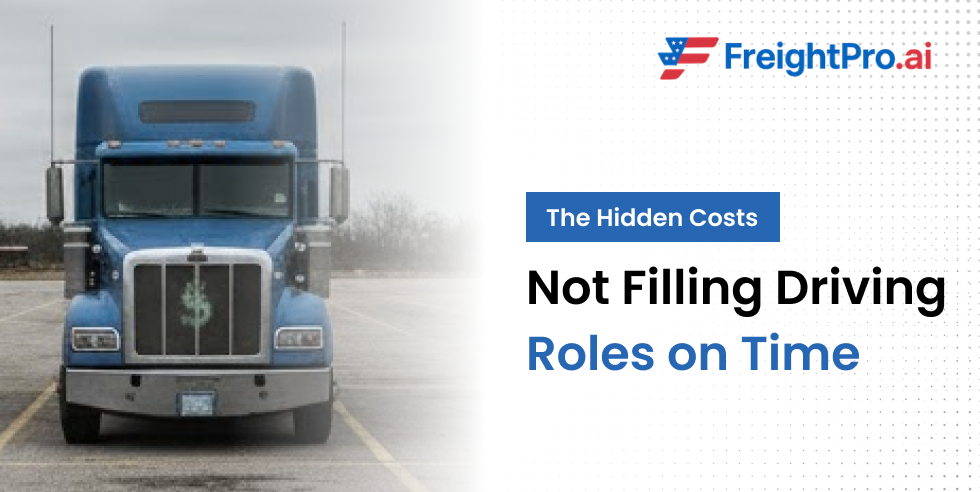
When a truck sits without a driver, the loss isn’t just today’s missed load and it triggers a chain of expenses that quietly drain profit, damage relationships, and slow growth. Many fleets track recruiting costs, but the real bill arrives through overtime, penalties, turnover, and reputation hits that show up weeks or months later. Here’s a clear look at what delayed hiring actually costs and how to get ahead of it.
Why Timely Hiring Matters in 2025
Freight demand is uneven, lead times are tight, and shippers expect predictable service. If roles stay vacant, dispatchers stretch coverage with overtime, safety risk creeps up, and premium loads slip to competitors. Even with a strong pipeline, every unfilled seat compounds costs across operations, compliance, and customer experience.
1) Immediate Revenue Leakage
A truck without a driver generates no linehaul revenue, but it still accumulates costs: lease payments, insurance, telematics, parking, and depreciation. Miss enough days and the fixed-cost-per-truck spikes, pressuring margins on the rest of your fleet to carry the slack.
Watch for: Trucks consistently under target utilization hours, frequent “no driver assigned” notes on morning dispatch.
2) Overtime & Burnout Premiums
To cover gaps, you encourage existing drivers to take on extra shifts. That means time-and-a-half wages, higher per-mile cost, and fatigue risk. Burnout increases soft violations, equipment wear, and preventable incidents—each with real dollar consequences and downstream claims.
Watch for: Rising overtime % of payroll, more reschedules due to Hours-of-Service limits.
3) Missed Loads & Accessorial Penalties
Empty seats lead to accept-or-decline trade-offs: you either pass on profitable loads or accept them and miss delivery windows. Detention, late fees, redelivery, and layover costs pile up. Some contracts include performance penalties that quietly eat quarterly profits.
Watch for: growing accessorials per load, recurring late arrival codes, chargebacks from key customers.
4) Customer Loss & Lane Loss
Shippers expect consistent service. If you miss too many loads, they’ll rebid lanes or spread freight to other carriers. You might keep the account, but you’ll lose the most efficient, high-density lanes and be left with lower-margin freight.
Watch for: shrinking share of wallet with anchor customers, RFPs that exclude your “used-to-be” lanes.
5) Safety Incidents & Insurance Creep
Stretching teams increases fatigue and incident frequency. Even minor claims can nudge insurance premiums and deductibles upward at renewal. A couple of preventable accidents can raise your cost base for years.
Watch for: upticks in near-miss reports, speeding/harsh braking telematics, and more frequent small claims.
6) Compliance Risk & Audit Exposure
Rushed backfills often mean paperwork shortcuts, including CDL status checks, drug/alcohol testing, MVRs, and training records. An audit or roadside inspection can surface gaps that trigger fines, OOS orders, and reputational damage.
Watch for: incomplete DQ files, delayed test results, expired med cards, or missing refresher training logs.
7) Recruiting Spend Inflation
When seats stay open, you throw money at the problem, more job board spend, higher sign-on bonuses, agency and temp premiums. Without better matching and faster screening, cost-per-hire climbs while time-to-hire doesn’t improve.
Watch for: rising $/application with flat show-up rates, bonus escalations that don’t reduce vacancy days.
8) Dispatch & Back-Office Drag
Vacancies force manual reshuffling, dispatchers re-sequence routes, CSR teams pacify shippers, and payroll corrects exceptions. Admin time shifts from optimization to firefighting, delaying continuous improvement projects that actually lower costs.
Watch for: more “hot” tickets, slip-seat juggling, and growing exception queues in TMS.
9) Equipment Depreciation Without Utilization
Payments, warranties, and scheduled maintenance continue even when trucks don’t roll. You’re paying to park assets while bidding competitively priced freight, a double hit.
Watch for: monthly finance costs per inactive unit, PMs done on mileage and calendar (paying twice).
10) Premium Rates for Last-Minute Coverage
Late driver assignments limit options. You buy higher-cost spot coverage, pay for relays, or accept suboptimal backhauls. The margin you thought you’d make disappears in recovery moves.
Watch for: increased brokered miles, more deadhead, rising cost per loaded mile on short-notice jobs.
11) Strategic Opportunity Cost
With empty seats, you pass on growth. New lanes, seasonal surges, or multi-year contracts with volume commitments. Competitors lock in density and better rates while you stabilize.
Watch for: decline in awarded lanes despite qualified bids, more “deferred” opportunities.
Practical Ways to Shrink Time-to-Seat
- Pre-qualified bench: Keep a rolling pool of vetted candidates with completed DQ files.
- Faster screening: Standardize checks (CDL, MVR, drug/alcohol, PSP) with clear SLAs.
- Mobile-first apply: Fewer fields, save-and-resume, instant status updates.
- Structured referrals: Pay quickly, tier rewards, and spotlight referrers.
- Data-driven matching: Use route/home-time preferences to reduce early turnover.
- Proactive retention: Coach on early soft signals (missed check-ins, HOS tightness, rising OT) before they turn into exits. (Platforms that unify sourcing to screening to scheduling help here; for example, FreightPro connects these steps so seats don’t stay empty longer than necessary.)
Conclusion: Vacant Seats Are Never “Free”
Leaving truck driving roles unfilled doesn’t just postpone revenue, it creates a hidden cost stack across overtime, penalties, safety, compliance, recruiting, and reputation. By measuring the full impact, watching early warning signals, and tightening the path from application to seat, fleets protect margins and customer trust. In a year where reliability wins bids, timely hiring is not a staffing task it’s a core profitability strategy.